Product Design
Interaction Design
Wearable Tech
MOMA: For the Moments that Matter
MOMA is an intimate set of wearable rings designed to foster acknowledgement and emotional presence between new parents during their first year postpartum. This project got selected as a finalist in Taiwan International Student Design Competition.

Inquiry
The project explores how design can support emotional connection in early parenthood, helping new mothers feel seen and supported by their partners during a time of change and overwhelm.
Duration
12 Weeks
Guided by
Mayukhini Pande
After birth, the baby becomes the focus, while mothers, often the primary caregivers, can feel emotionally isolated, guilt and pressured to meet social expectations of a good mother.
Through my Research, I found that: They often long for most is to feel seen by their partner - acknowledged, cared for, and emotionally supported. It’s not about the lack of love. It’s about the moments that quietly slip away in this huge transition of life.

Partner support is a key protective factor against perinatal depression and anxiety. Yet, there remains a gap in clear, actionable ways for partners to express that support.
that lead the project towards


How might we create a sense of emotional presence between new parents in the first year postpartum, so the primary caregiver (mother) feels seen, supported, and connected to their partner?


Who live in urban cities, in a nuclear family with little to no help for childcare
By creating emotional visibility
Feel recognised for what they do
Acknowledgment, assurance & togetherness.

what if an accessory can facilitate this?





CONNECTION RINGS
FOR MOMENTS THAT MATTER
SERENDIPITY
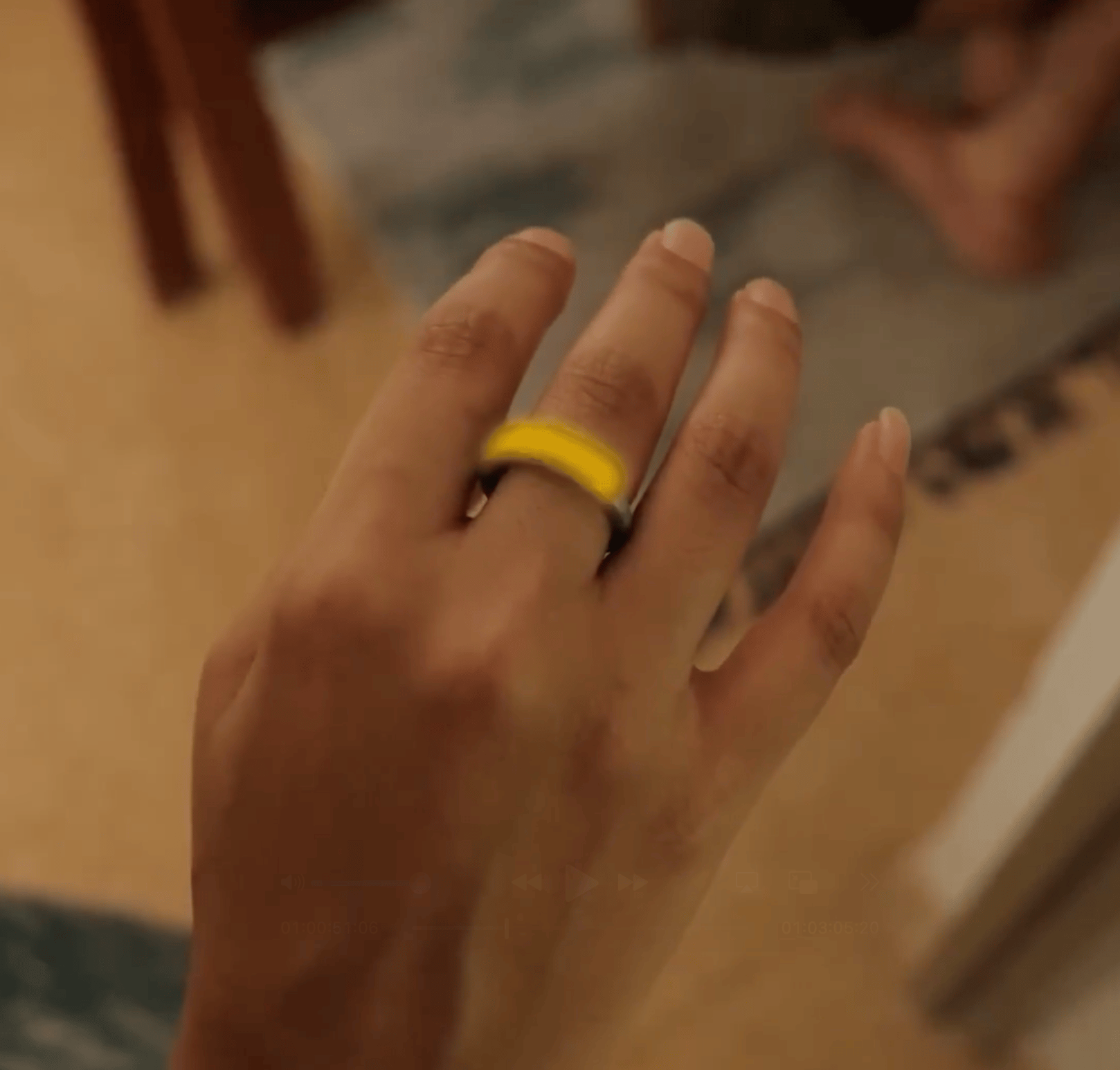
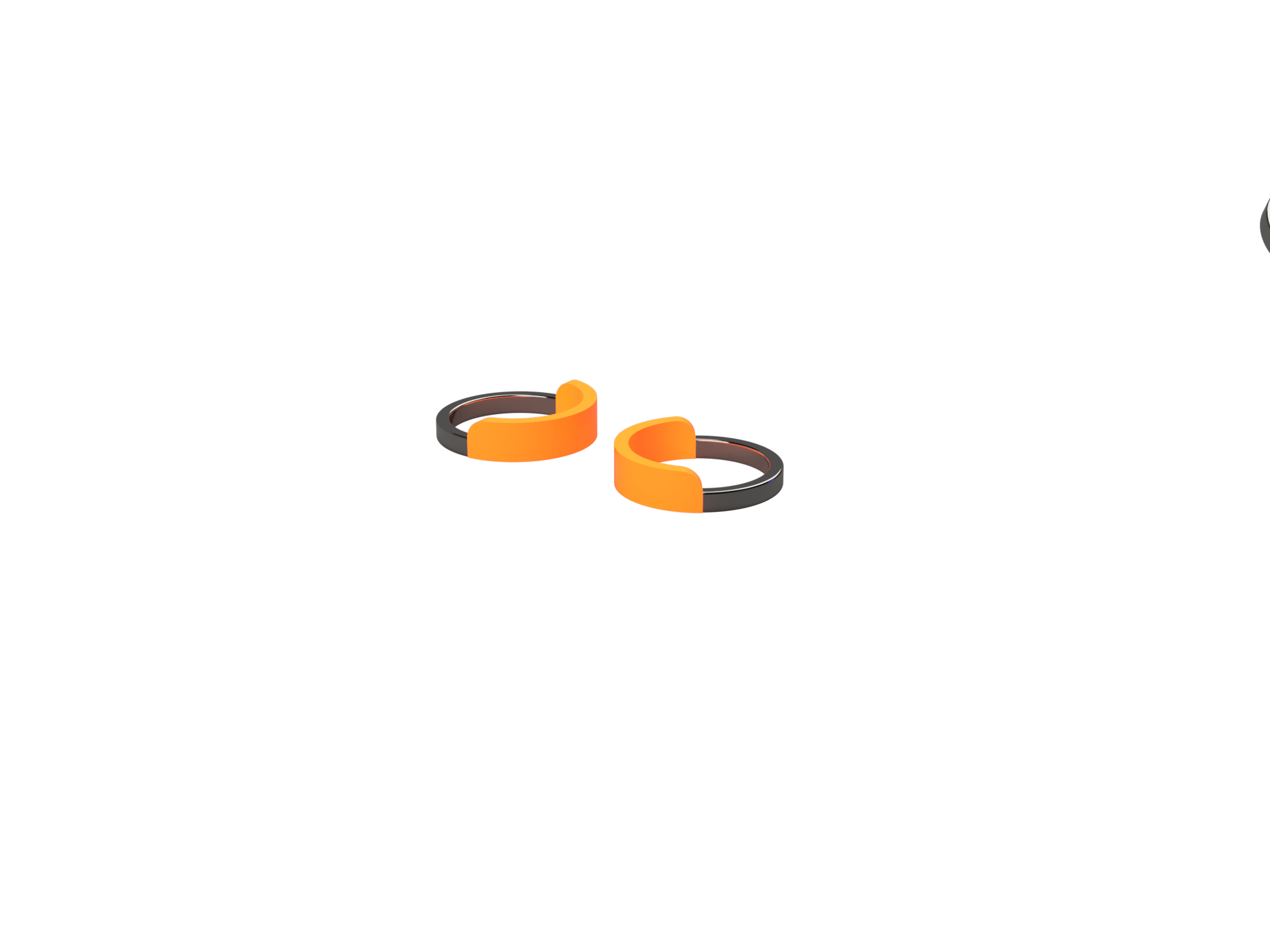
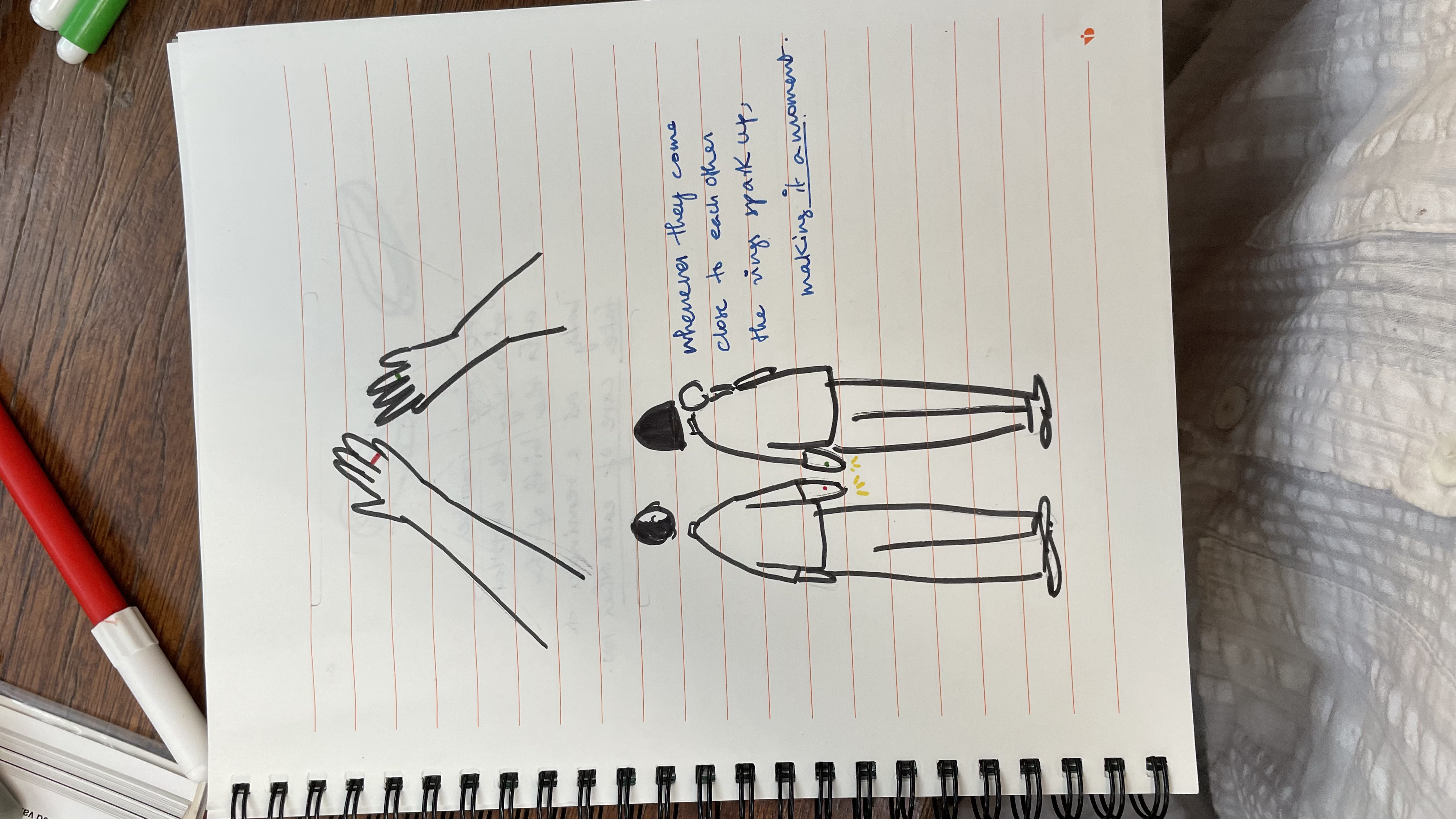
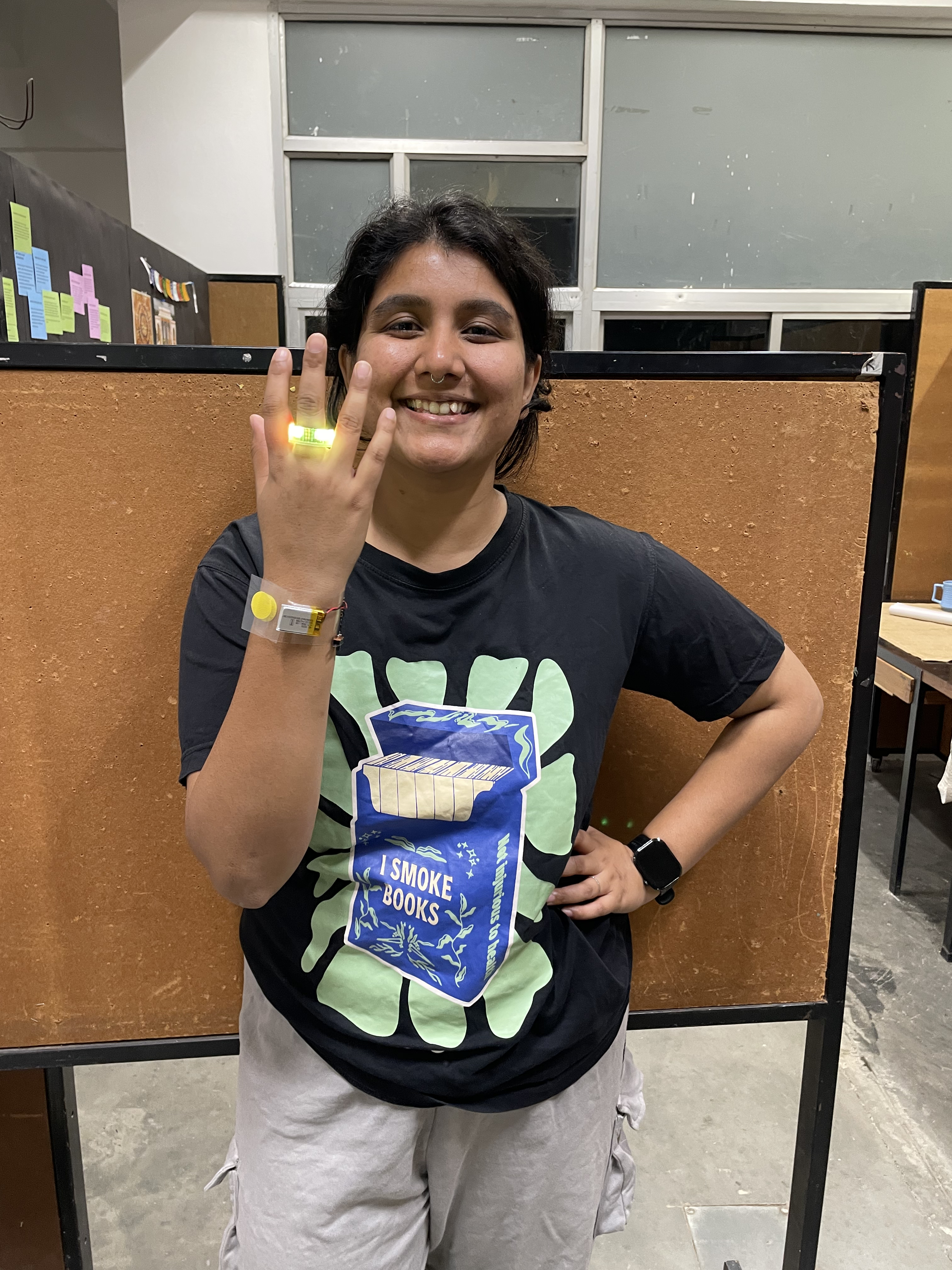
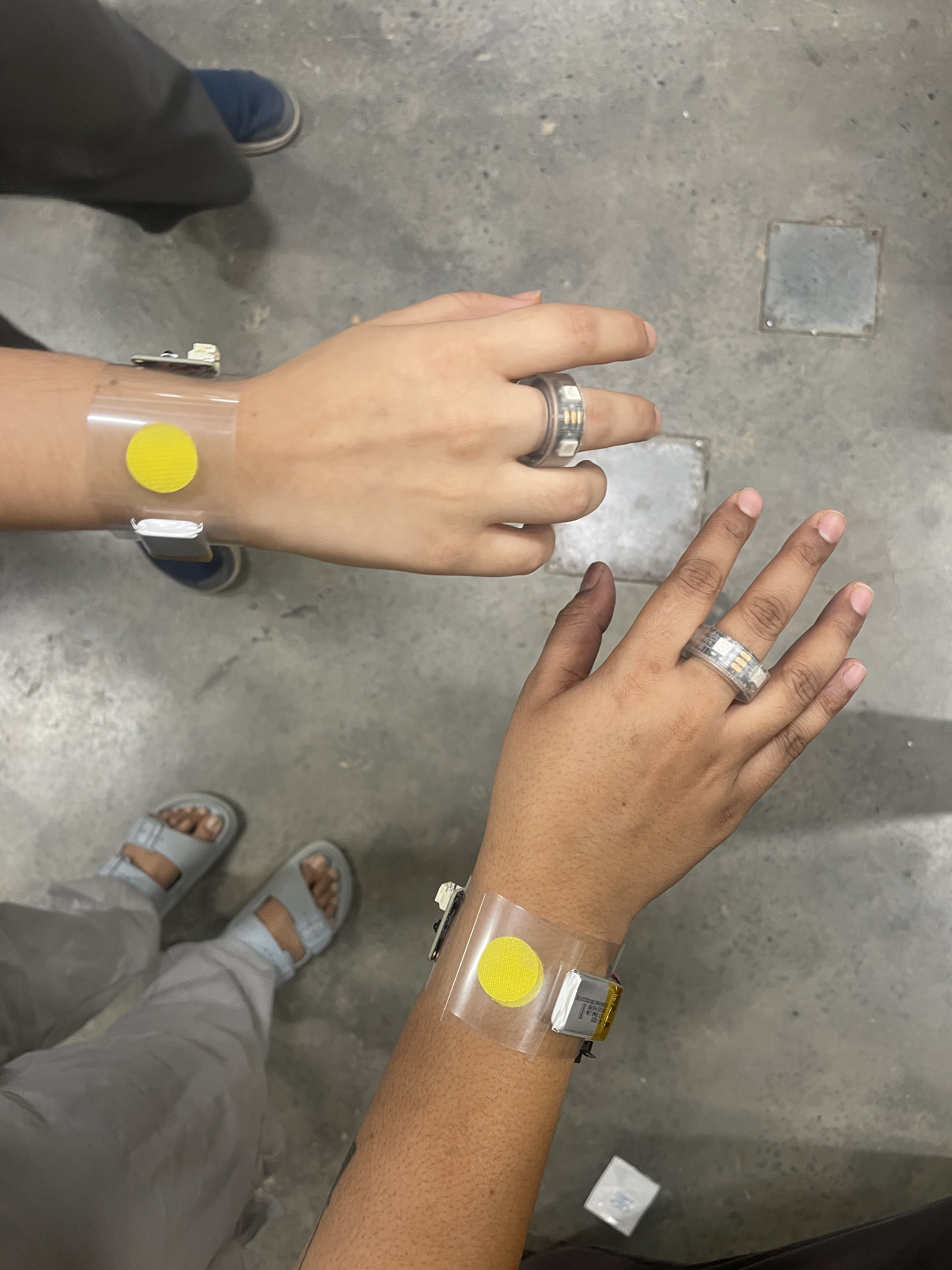
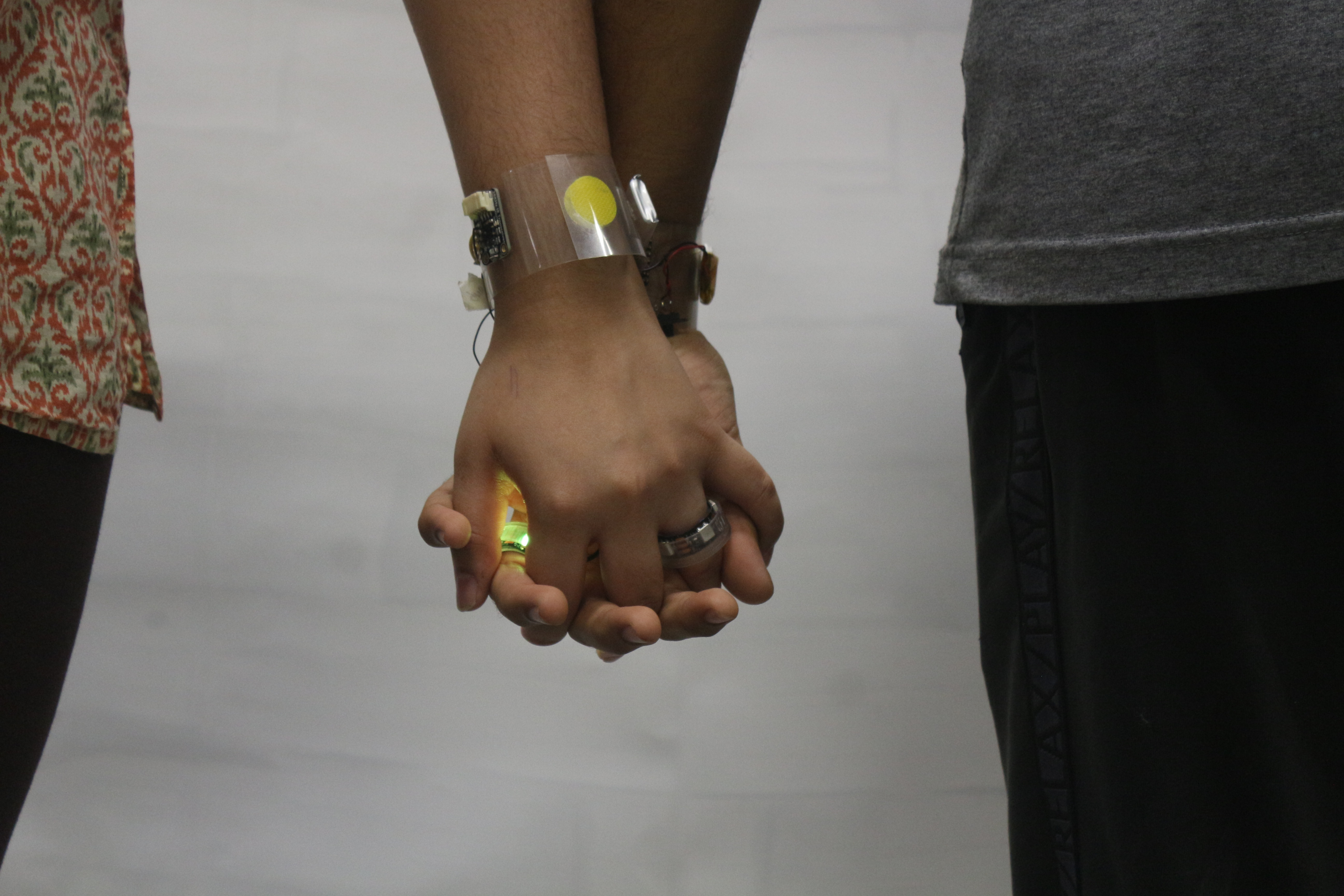
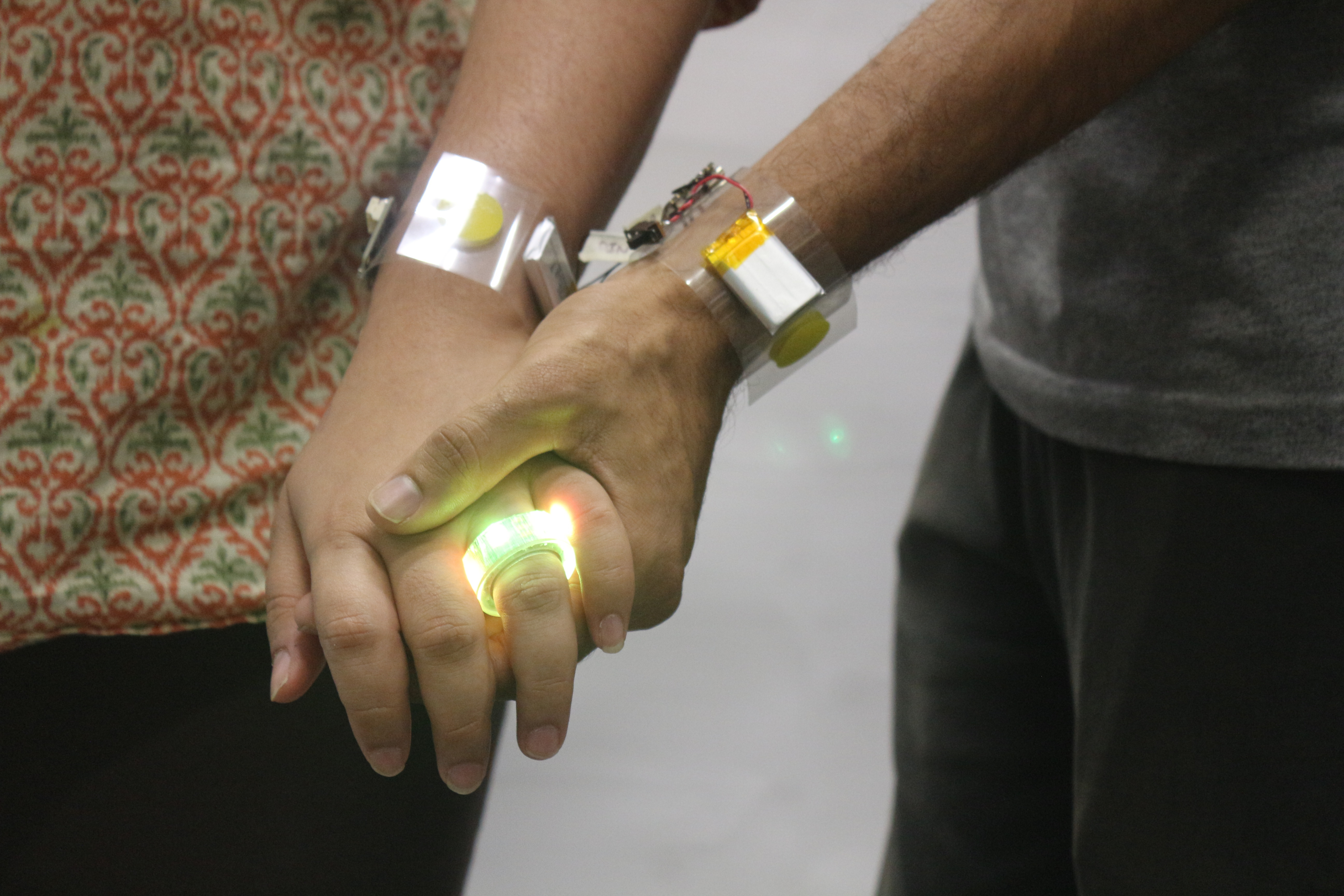
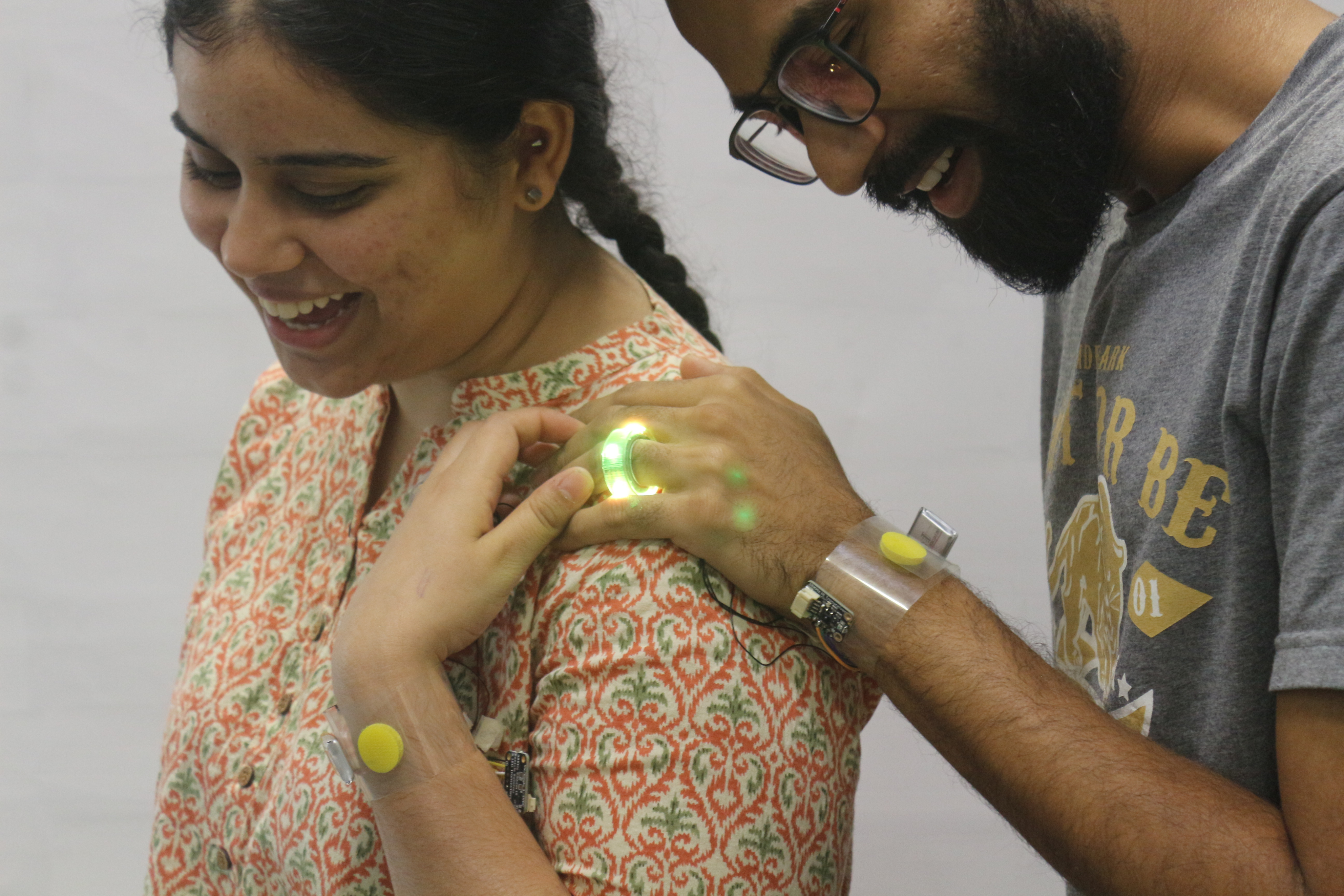
MOMA rings glow softly when both parents come into close proximity. They respond with a gentle light pulse that lasts just a few seconds. Sometimes, connection and being seen can be just walking past each other and noticing.
CO-REGULATION
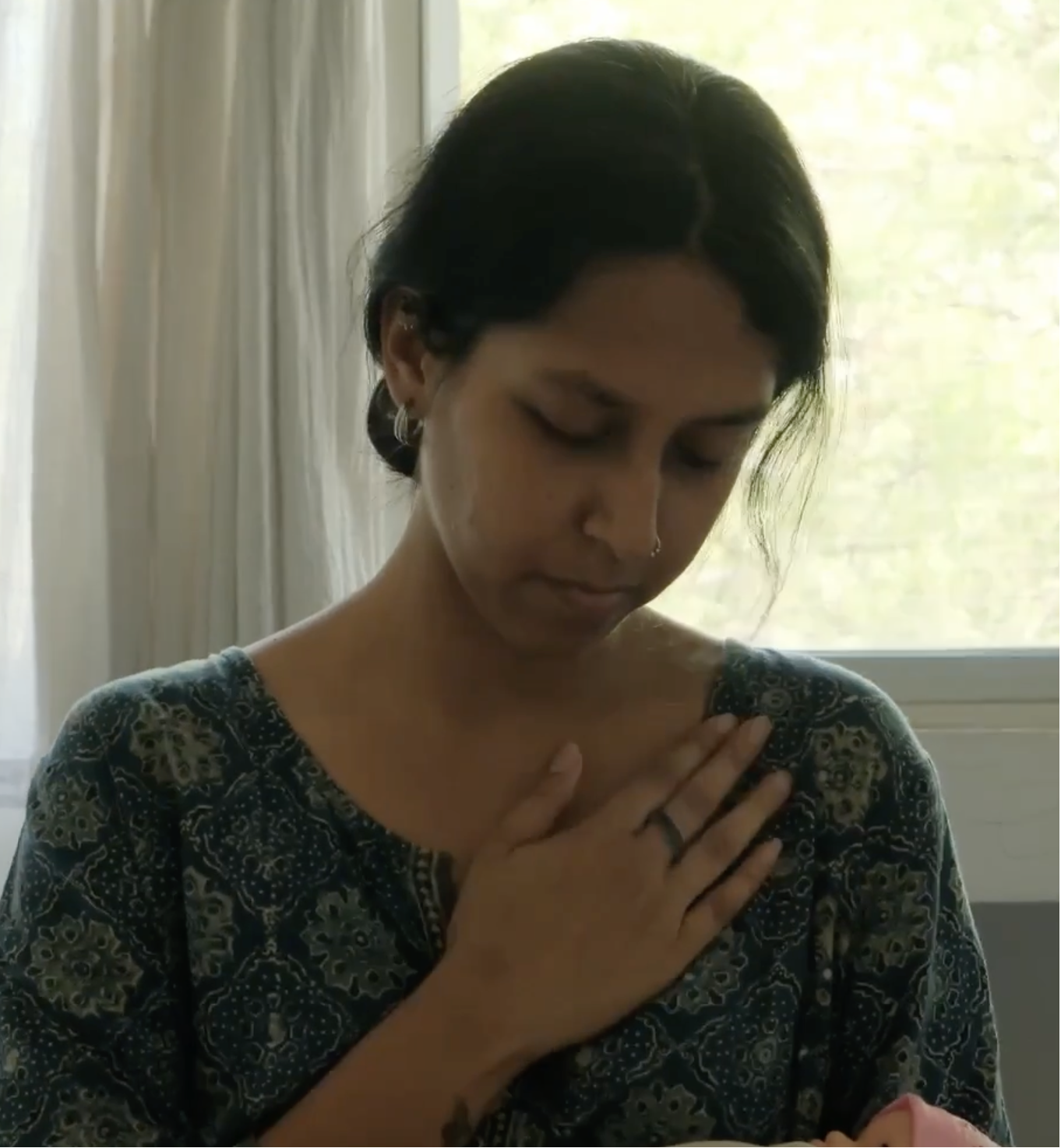
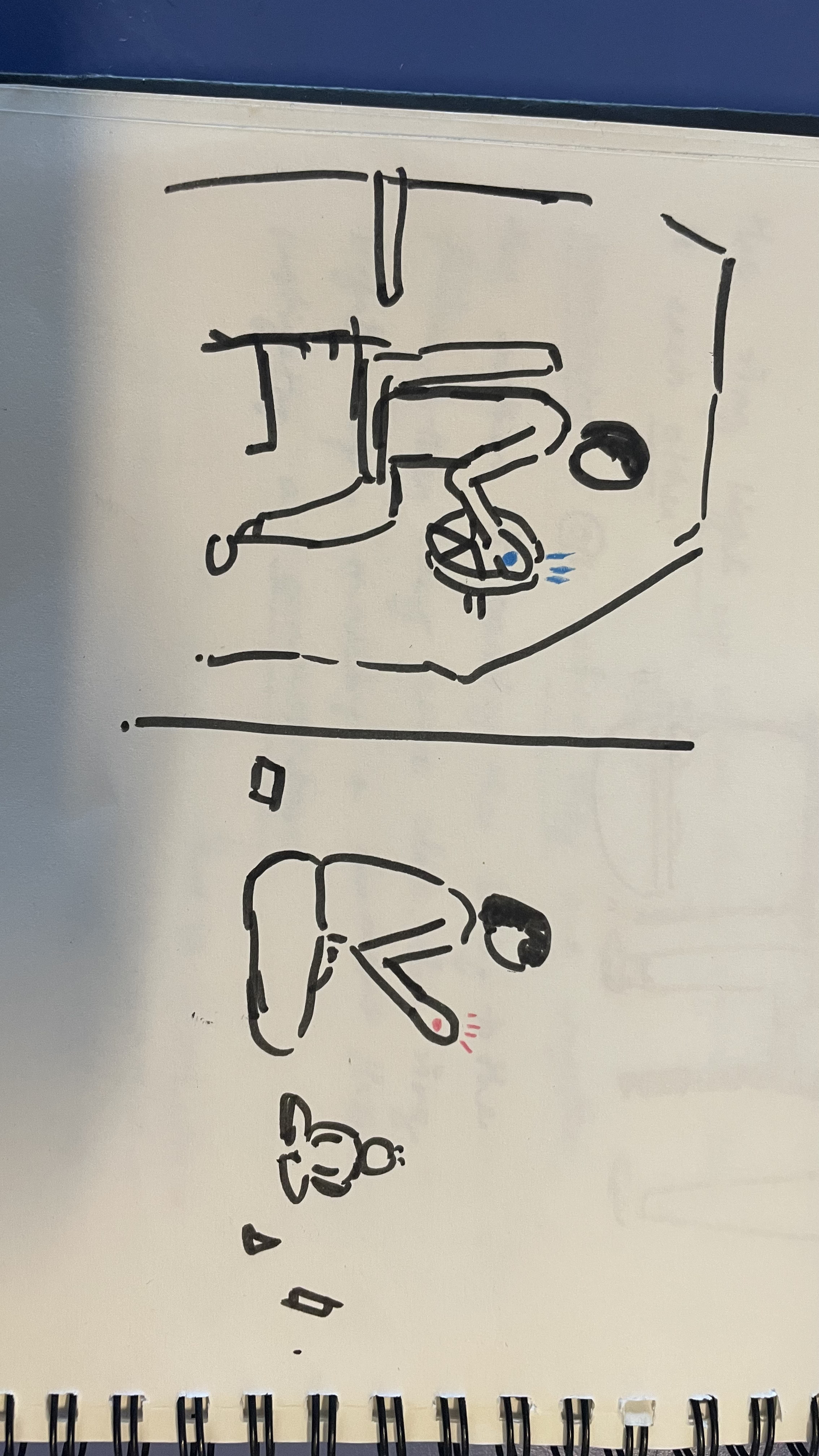
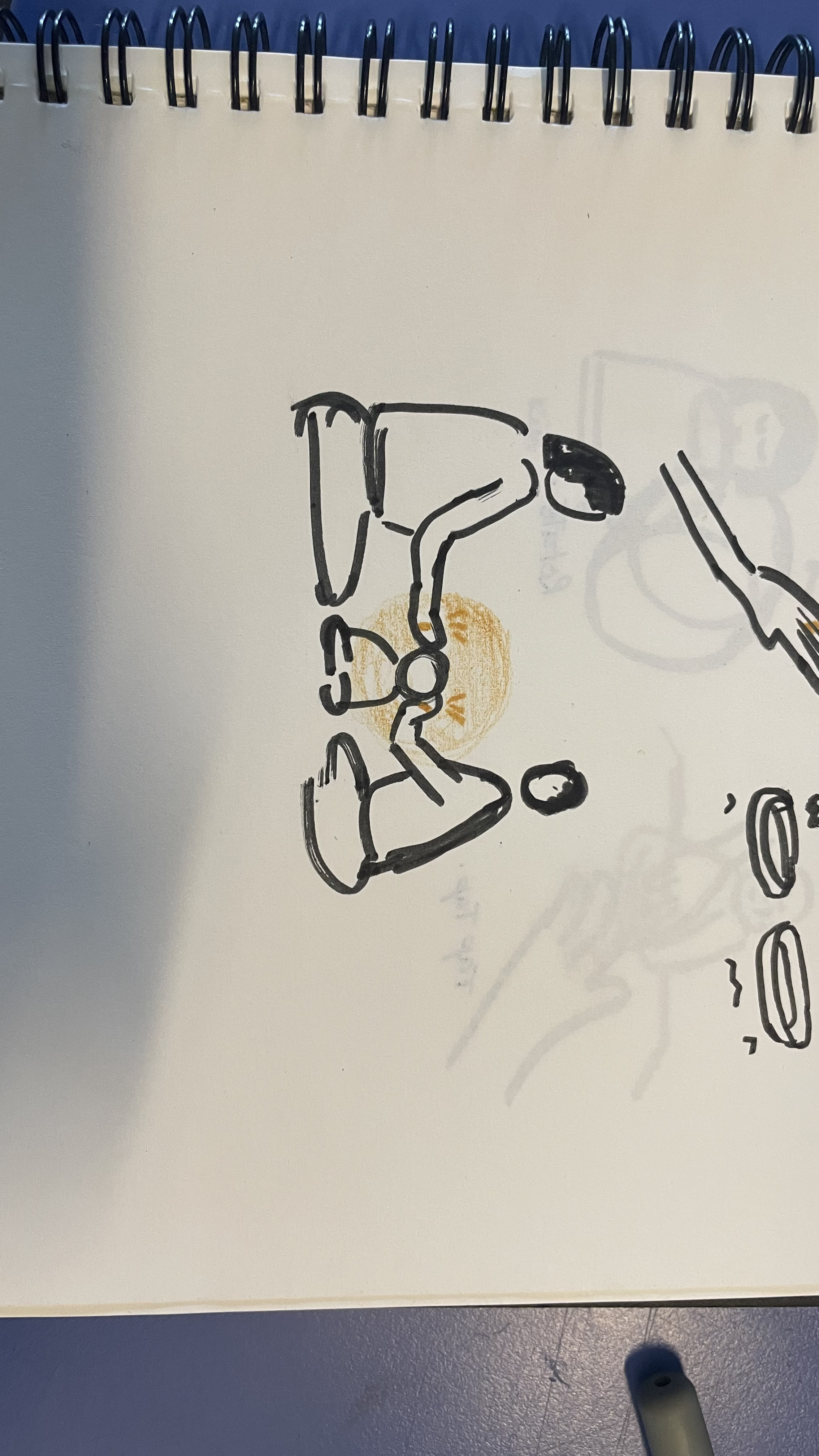
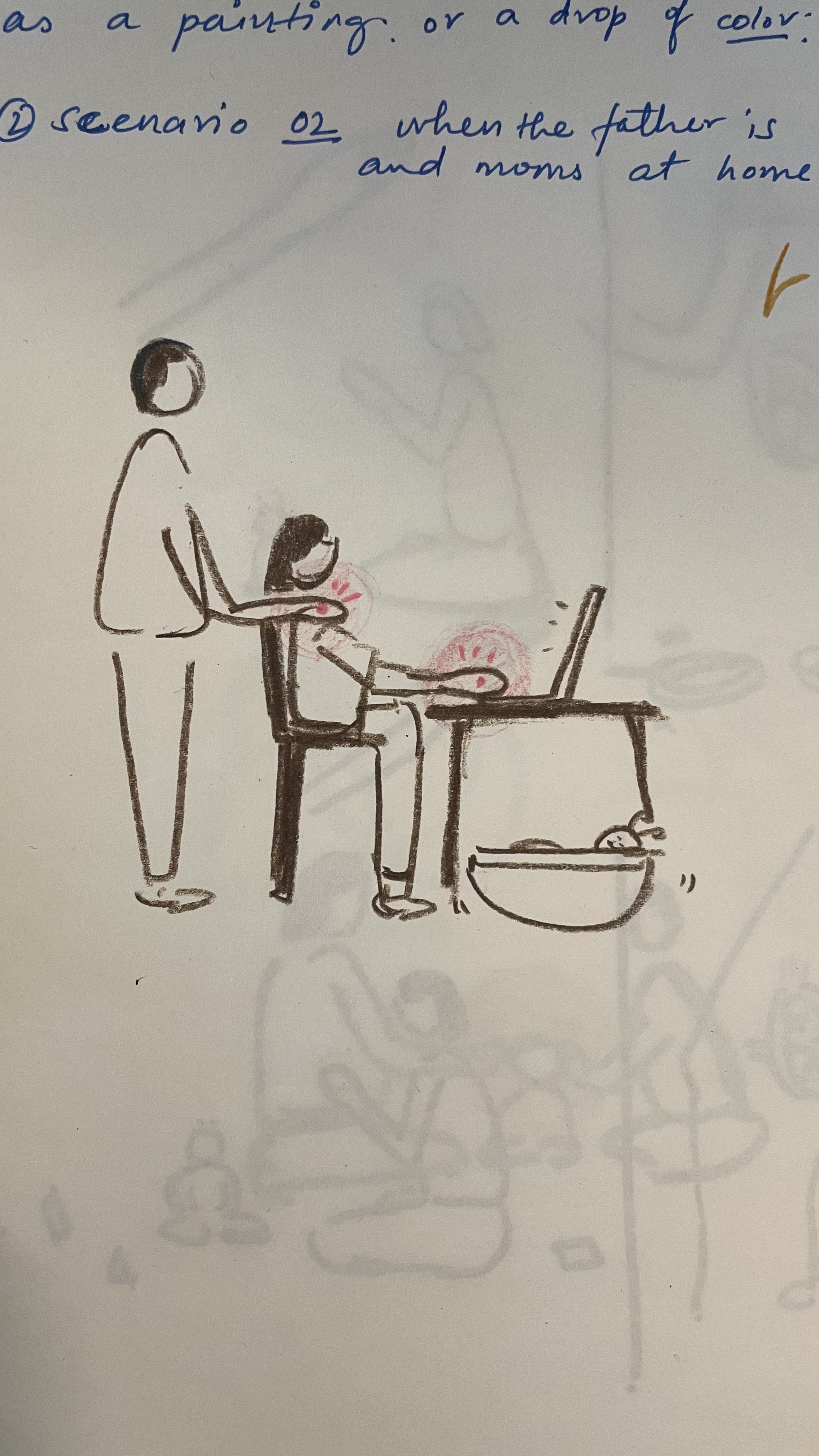
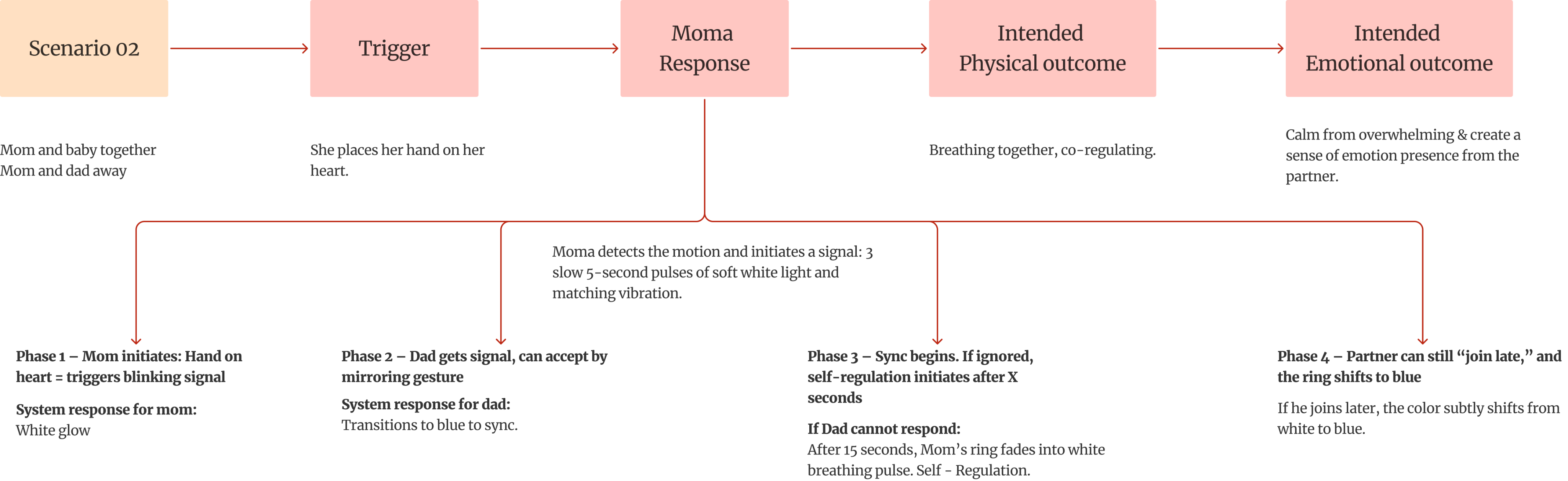
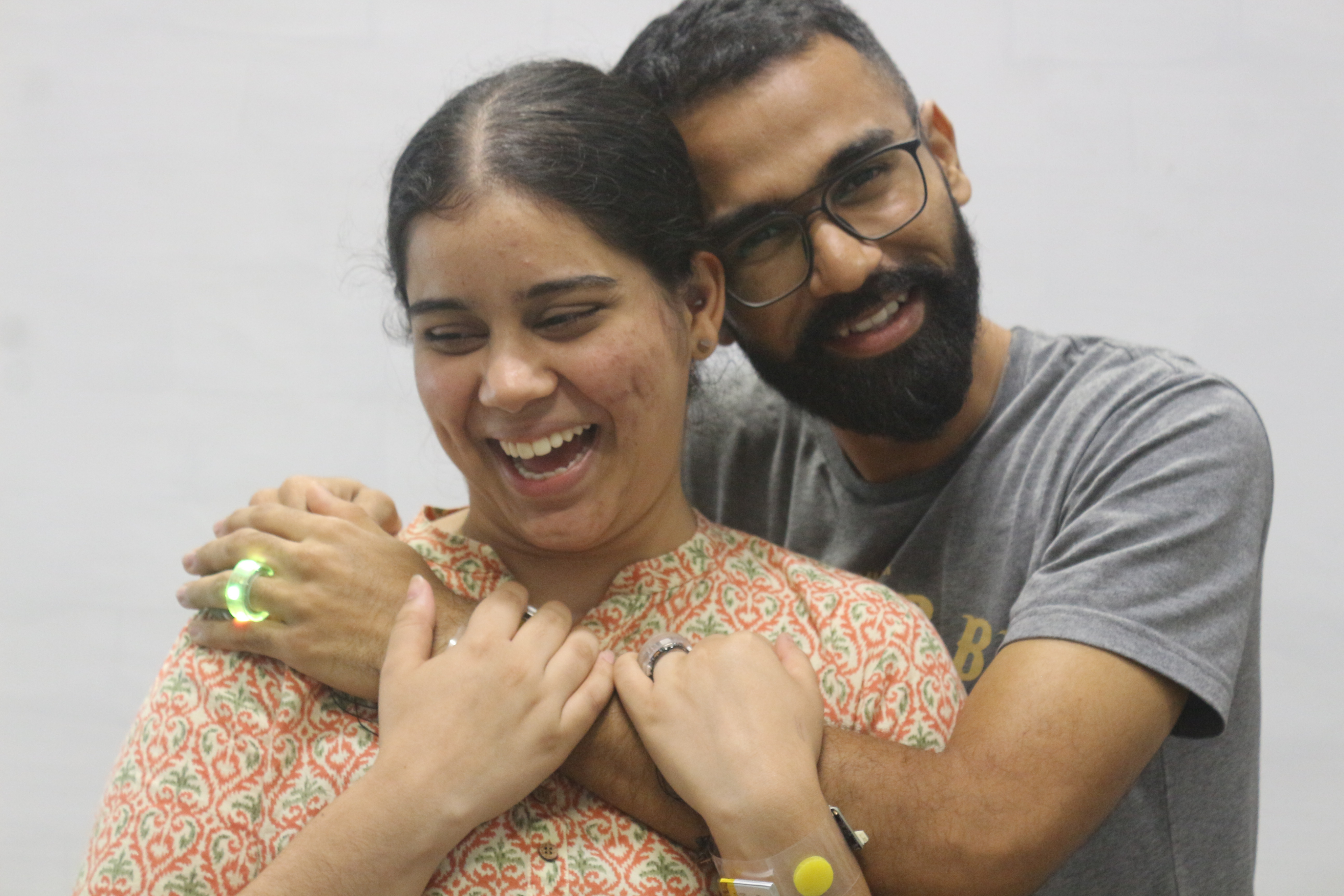
MOMA rings allow partners to support in moments of overwhelm, even from a distance. When the mother places her hand on her chest, a soft breathing glow activates, inviting her partner to respond. When both do, the rings glow in shared rhythm; offering calm through connection and presence.
CARE
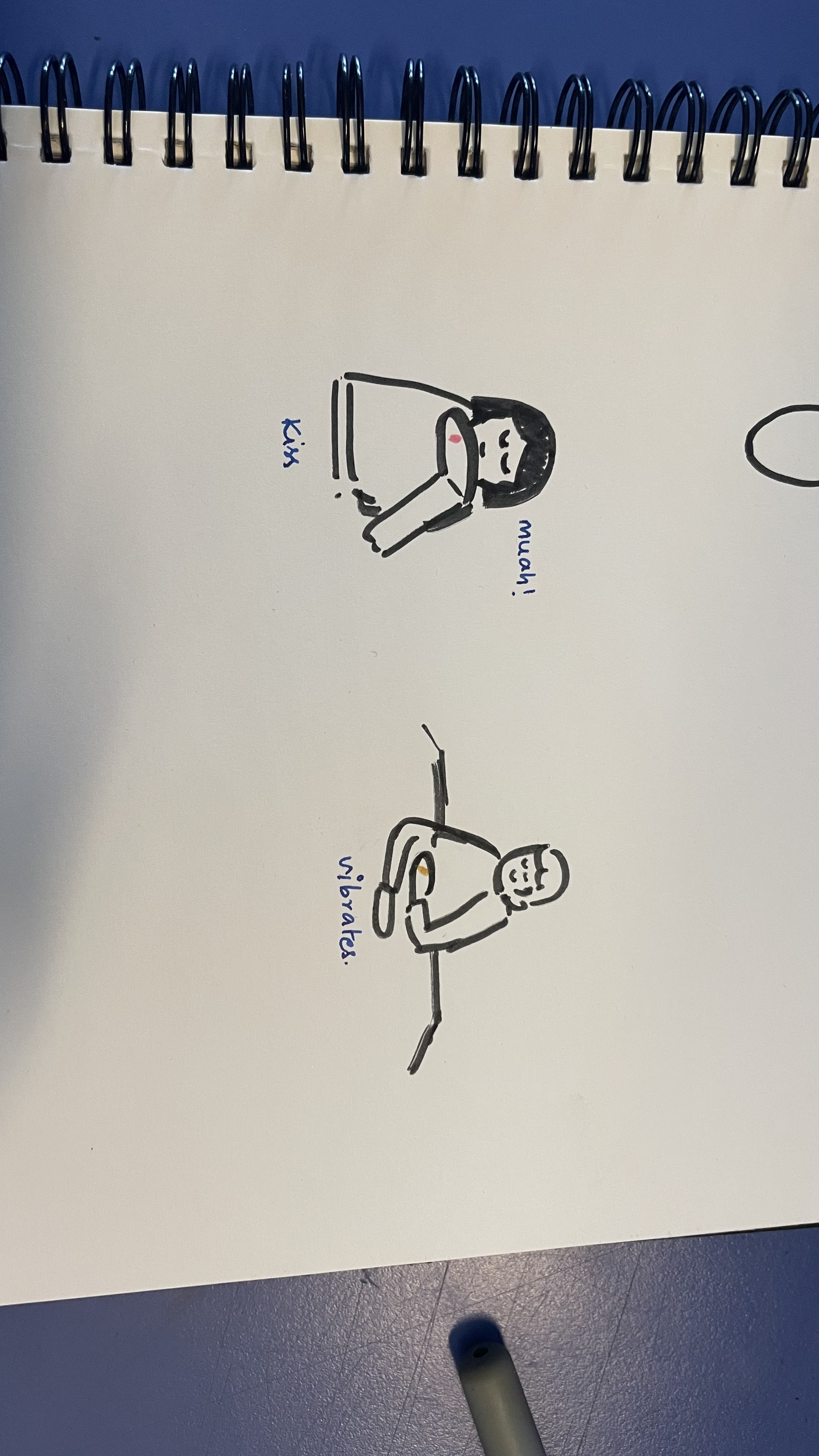
A gentle vibration and glow signal the partner, without words or sound only through light and haptic feedback. Perfect for moments when the baby is asleep. This discreet interaction creates space for care, when communication needs to stay silent.




Moments of Nearness
These bubbles mark the small, quiet moments you were near each other and noticed.

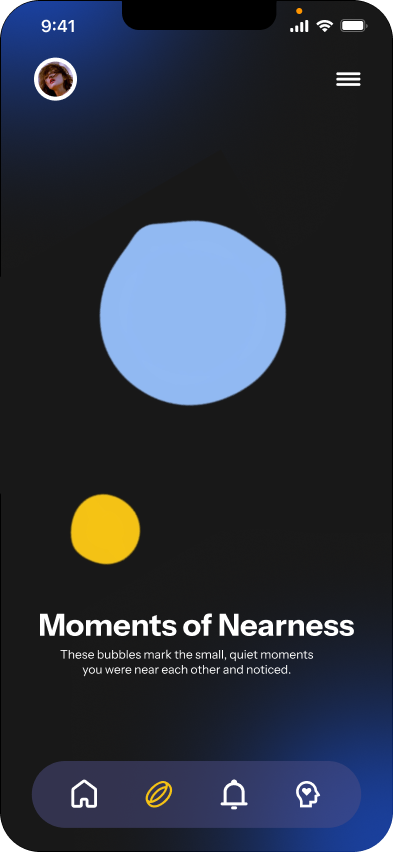
Moments together gradually shape a visual memory of their day.



Hey Rahul,
You supported your partner through their tough time
today!

Ways to support her when she is overwhelmed.
by Jamie Richards
by MIT Psychology dept.

How to deal with anger & irritability?
by MomTherapy
Be aware of early signs of mood disorders.
by Smita Devari
Is mom being low these days?

Conversations
Health


A page dedicated to learning about postpartum mental health and emotional care.



Energy Level

Hey Priya,
How are you feeling this morning?



01
02
03
04
05
06
week
week
week
week
week
week
Reflect here


A space for mothers to track their energy, emotions, and postpartum journey.



Check-in on your partner!
Pending
Compeleted
All
Baby Care Check
Baby Care Check
See if assistance is needed with baby care
Today, 3:15PM
Today, 3:15PM
Check-in now

Things to buy
Occasion
Rest Reminder
Quick Call?
- Diapers
- Wet tissues
Today, 3:15PM
updated by Priya
Ensure partners is taking rest during the day.
Partner’s birthday is coming, would you like to plan something?
A quick phone conversation!
Today, 12:00PM
Today, 5:00PM
Check-in now
Check-in now

A dashboard of reminders for partner to stay mindful of the shared needs.
How did I get here?
My inquiry begin with a sudden distress call from a friend, who’s a new mother.


Hey, are you okay?

I can’t do this anymore.
What does the journey towards motherhood look like for different individuals?
What are new mothers feeling?
To be or not to be a mother?
APPROACH


THINKING
Inquiry & Curiosity
Learning & Iterating
Solution
Listening & Empathising
Primary Research
Secondary Research
FEELING
ACTING


SECONDARY RESEARCH
THINKING
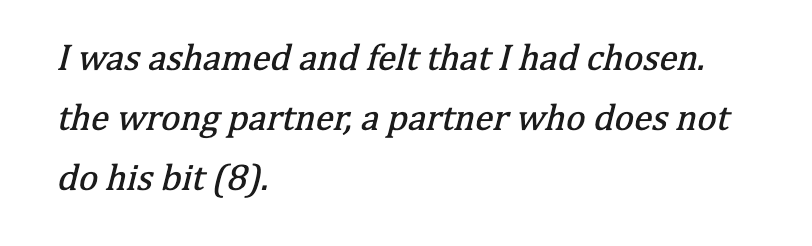
Phase 01: The secondary research focused on understanding the lived experiences of parents and mothers in the postpartum journey through books, research articles and a lot of reddit threads.

KEY INSIGHTS
Fence of motherhood
Many feel pressured into motherhood by societal expectations rather than personal choice.
New Mothers
Many mothers carried parenting as their own burden, leading to feelings of overwhelm, guilt, and loneliness.
New Parents
Mothers often see their partner’s emotional presence as key to forming a true family unit.
PRIMARY RESEARCH
FEELING
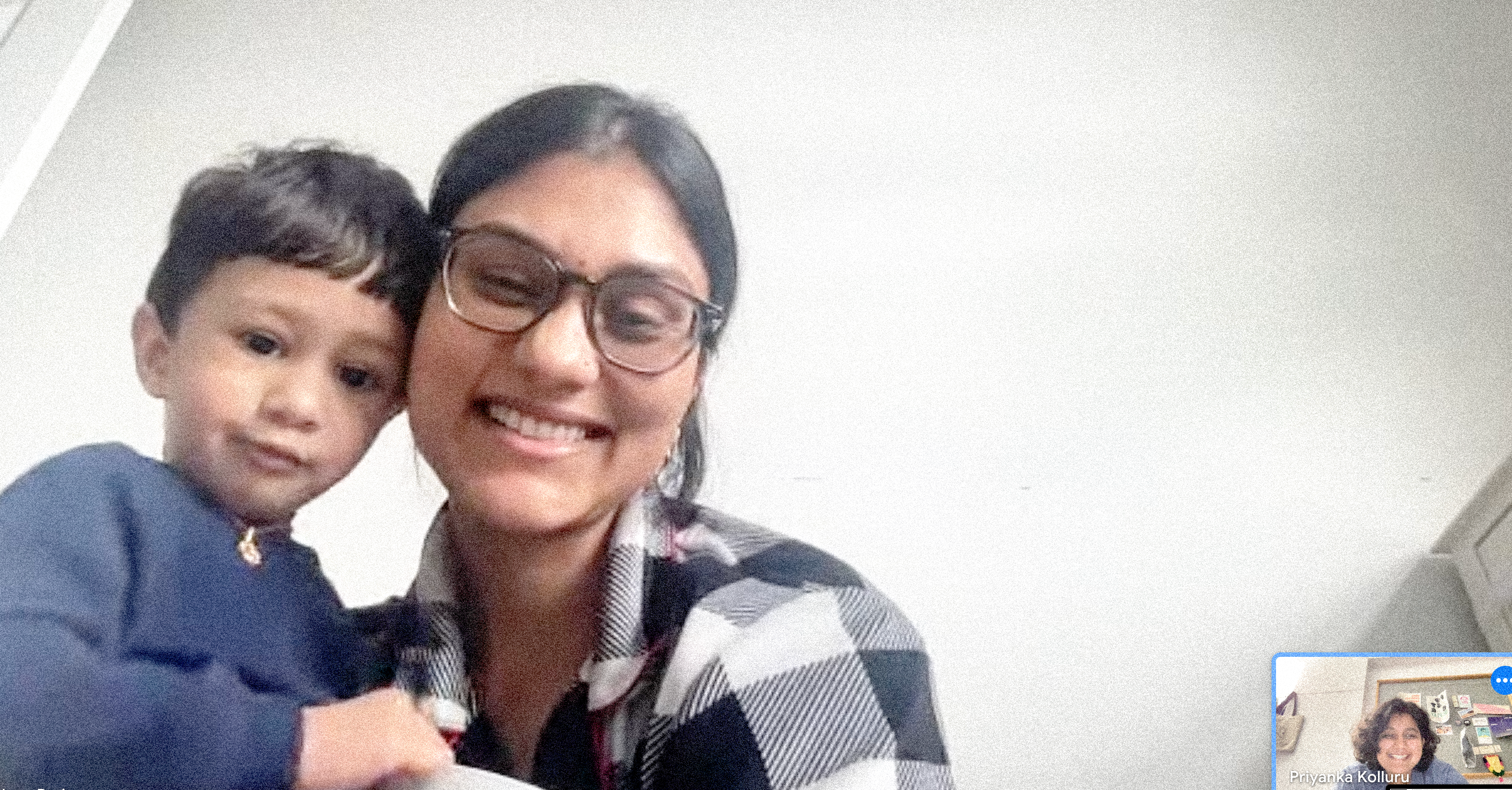
Phase 02: Understanding what mothers-to-be feel before birth was essential, as the emotions they carry forward shape their experience of motherhood. The primary research began with conversations and interviews with mothers-to-be, new mothers, and parents in the postpartum stage.
Focus Group Interview: Mothers to be

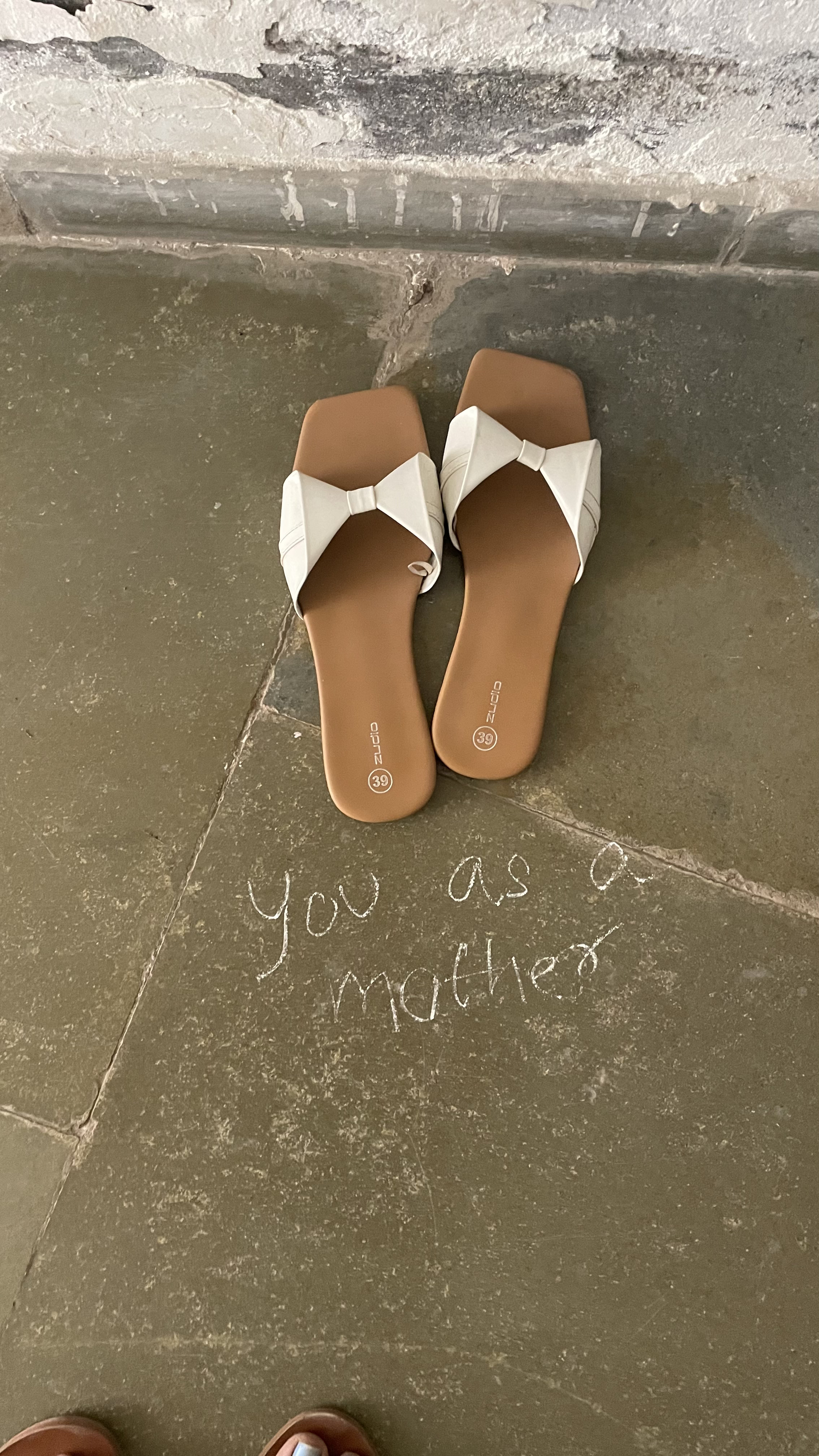
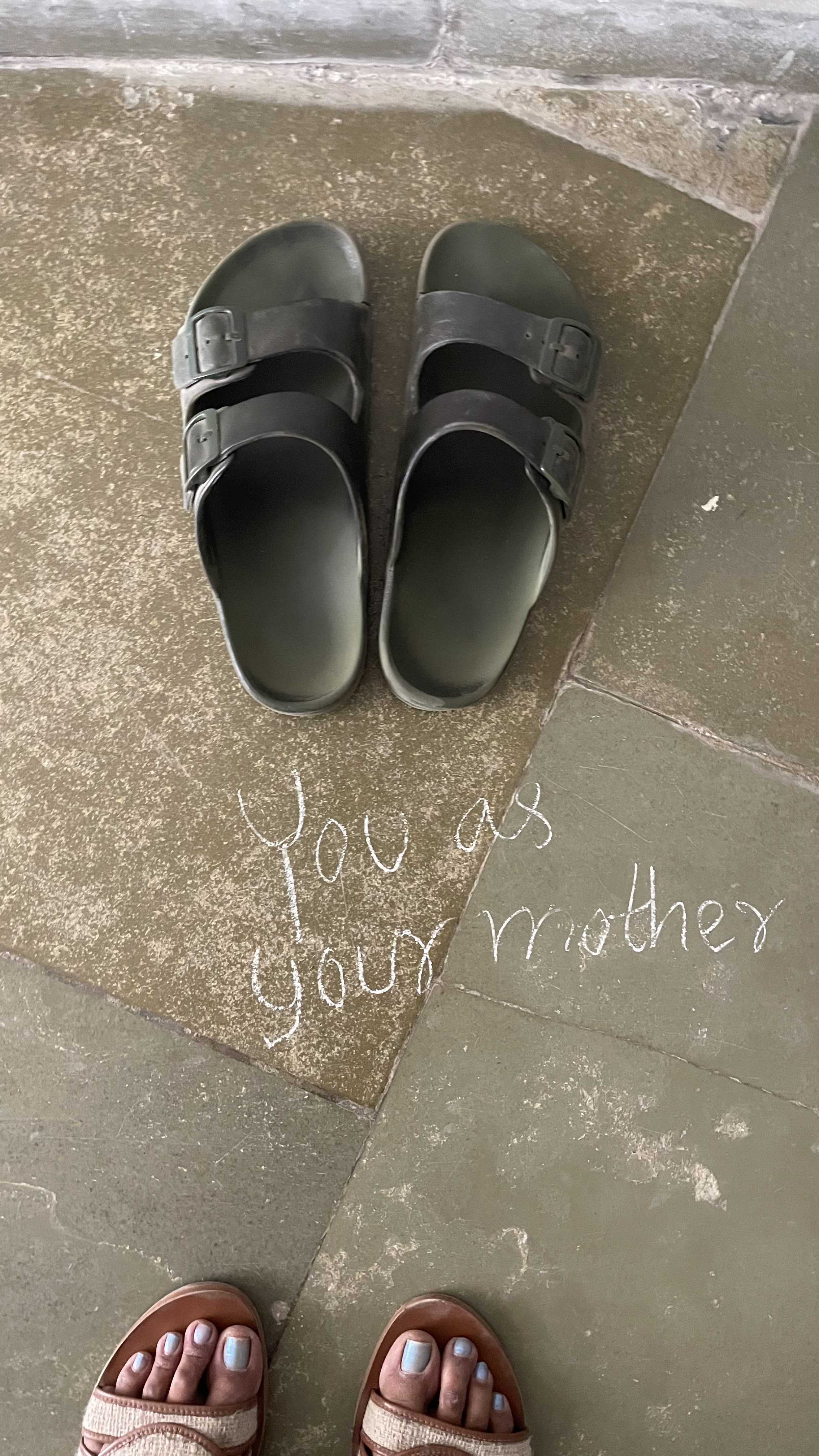
Step in the shoes of: Cultural probe used to communicate sensitive conversations.

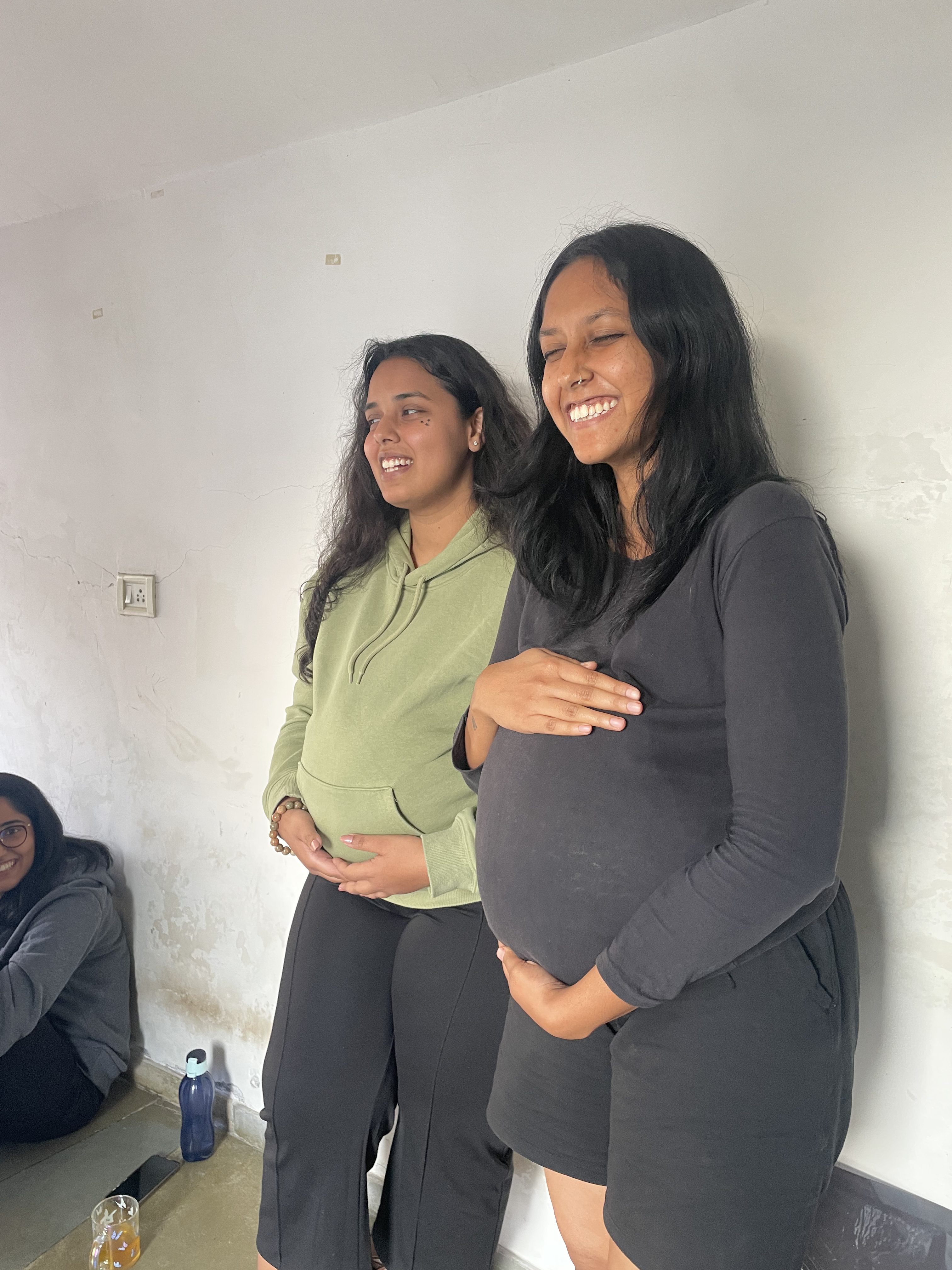

Working with embodying a near-body experience of becoming a mother to understand how they feel.
Interviews with New Mothers

KEY INSIGHTS



Fear of being isolated
We want an emotionally
involved partner
Motherhood involves
complex feelings & decision making.


A partner’s capacity for emotional labor, shared responsibility, and self-awareness heavily influences decisions about parenthood.

61%

50%

33%

61% of mothers feel unseen and unacknowledged of their growth and efforts through this transition

50% of mothers feel unequal division with physical & emotional labor.

33% of mothers find it difficult asking for help.
Many new mothers feel unseen and unacknowledged during the transition into parenthood, particularly by their partners, whose recognition and presence they often long for most.
SOLUTION
ACTING
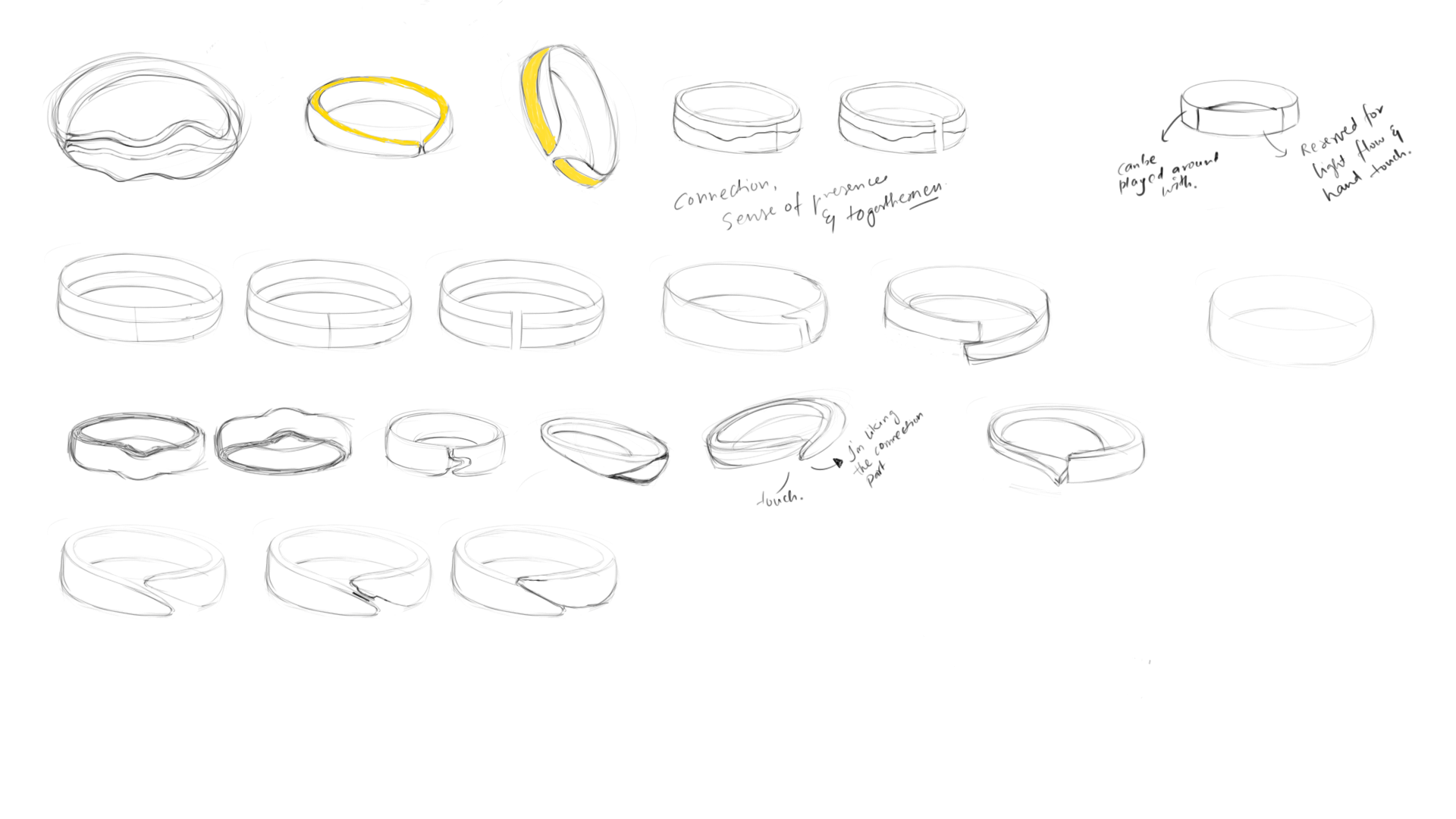
Phase 03: In this phase, the focus was on ideating and refining concepts through cycles of feedback and reflection. Understanding what acknowledgement is in the first place and multiple interaction possibilities were explored to understand how design could communicate emotional support and acknowledgment.
What is Acknowledgement?
The three interactions of the solution are based on these three principles
Awareness
You notice something the person is doing, feeling, or experiencing.
Expression
You verbalize or show that you see and appreciate their effort.
Reinforcement
You act on it; offer help, show appreciation in a tangible way.
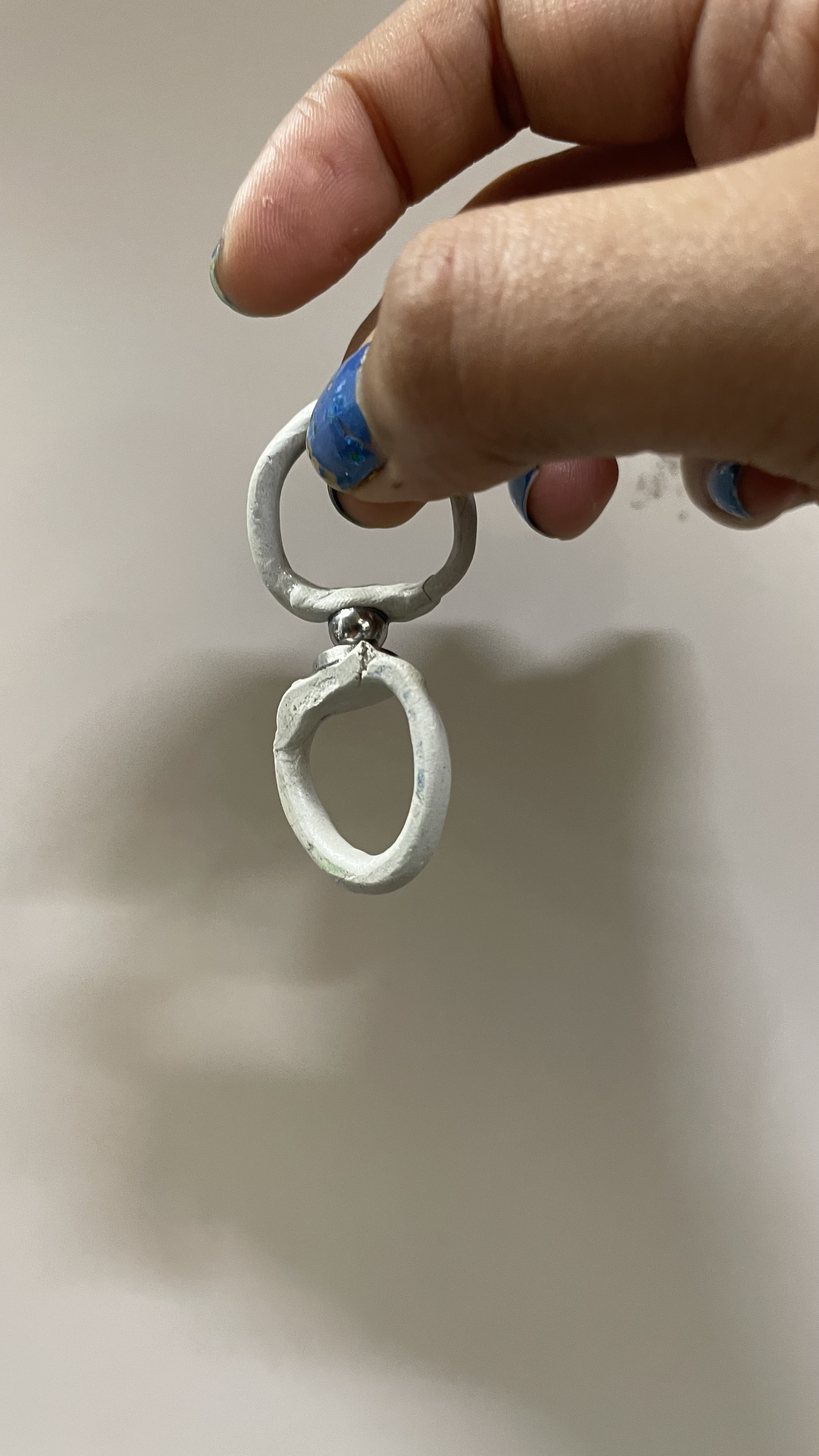
The ring form was chosen for its symbolism of commitment and its affordance of being worn close to the body.
Light has been chosen for it to represent spark and as a medium to bring attention.
IDEATION
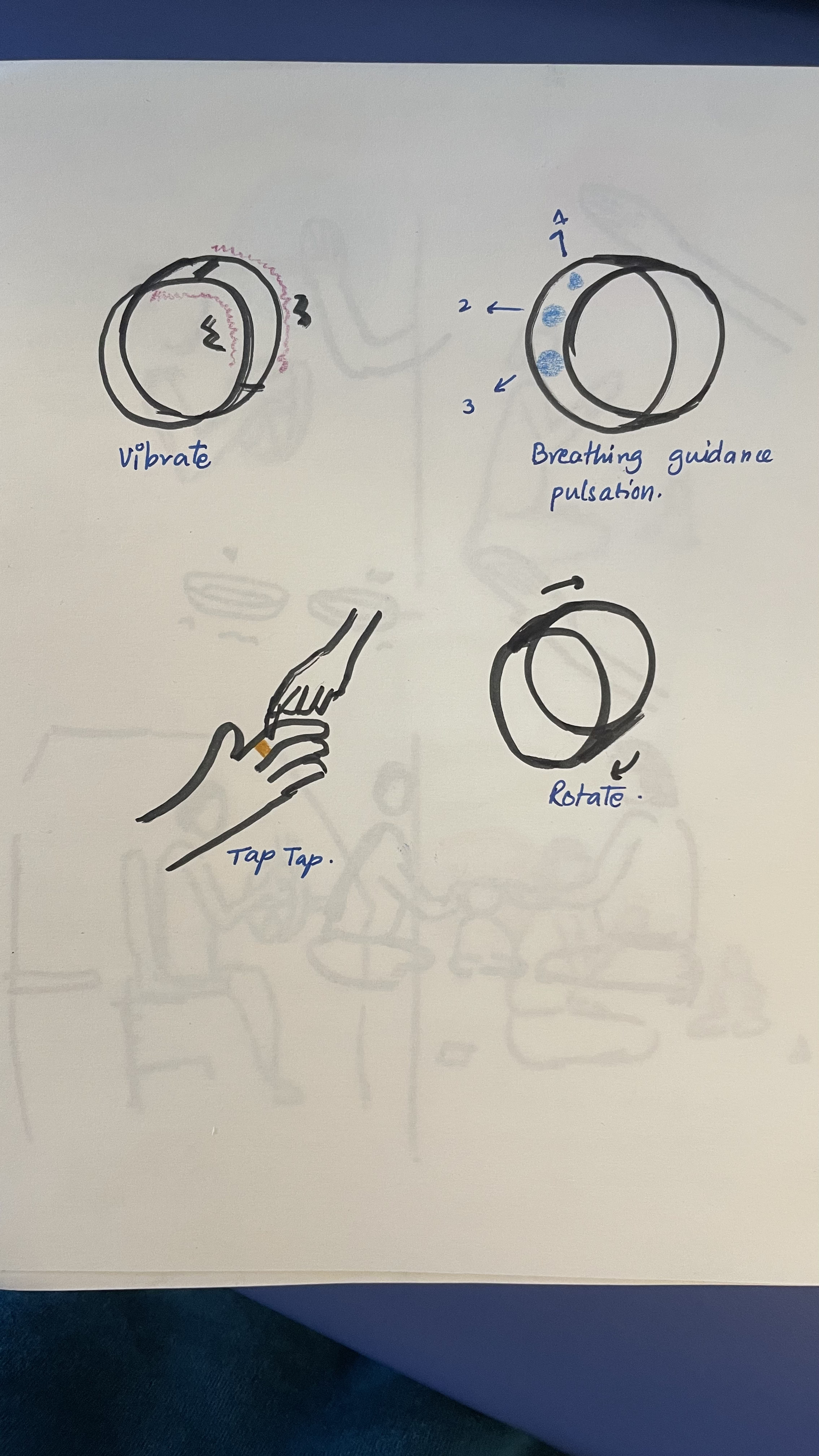
INTERACTION MAPPING



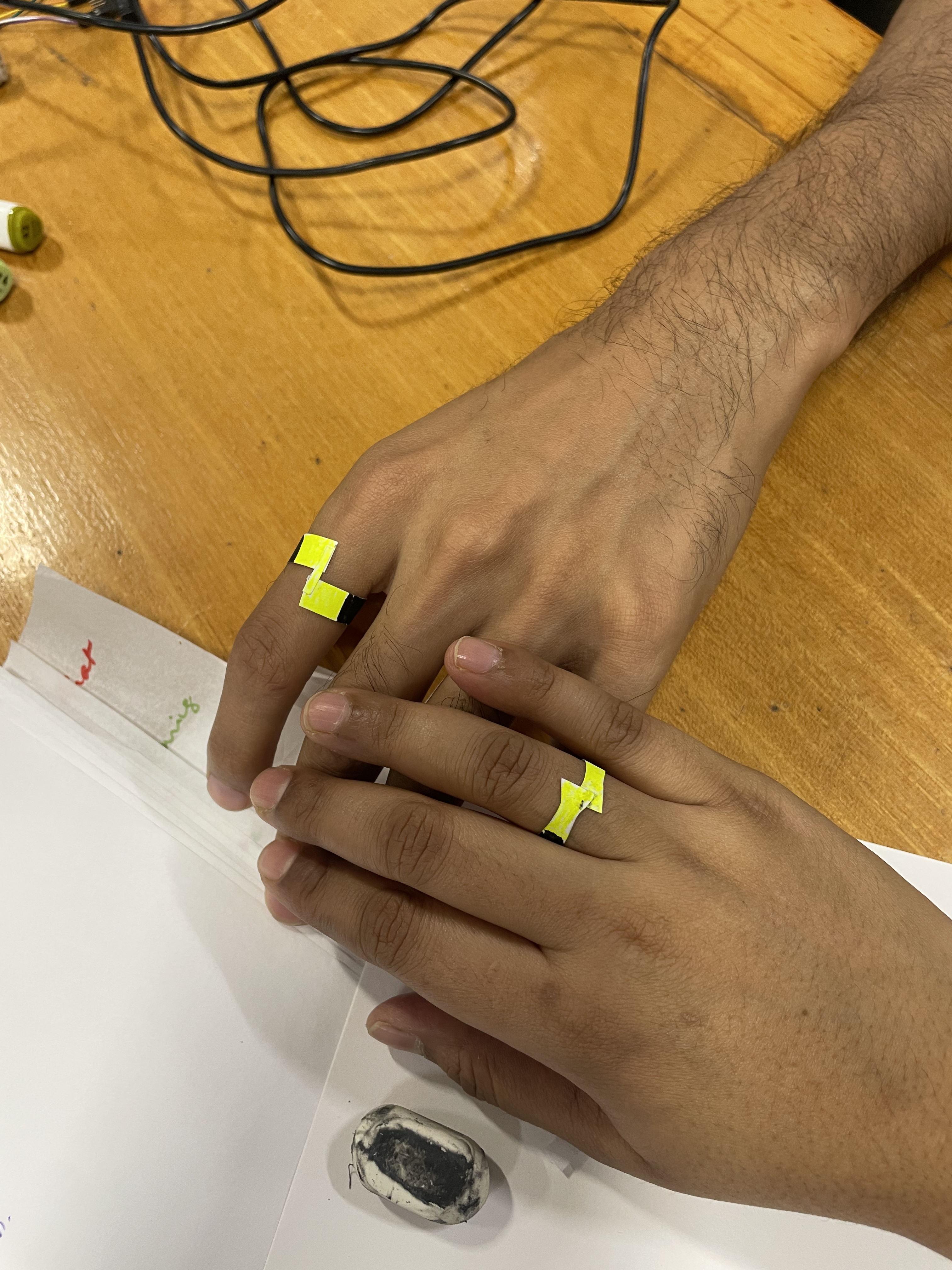
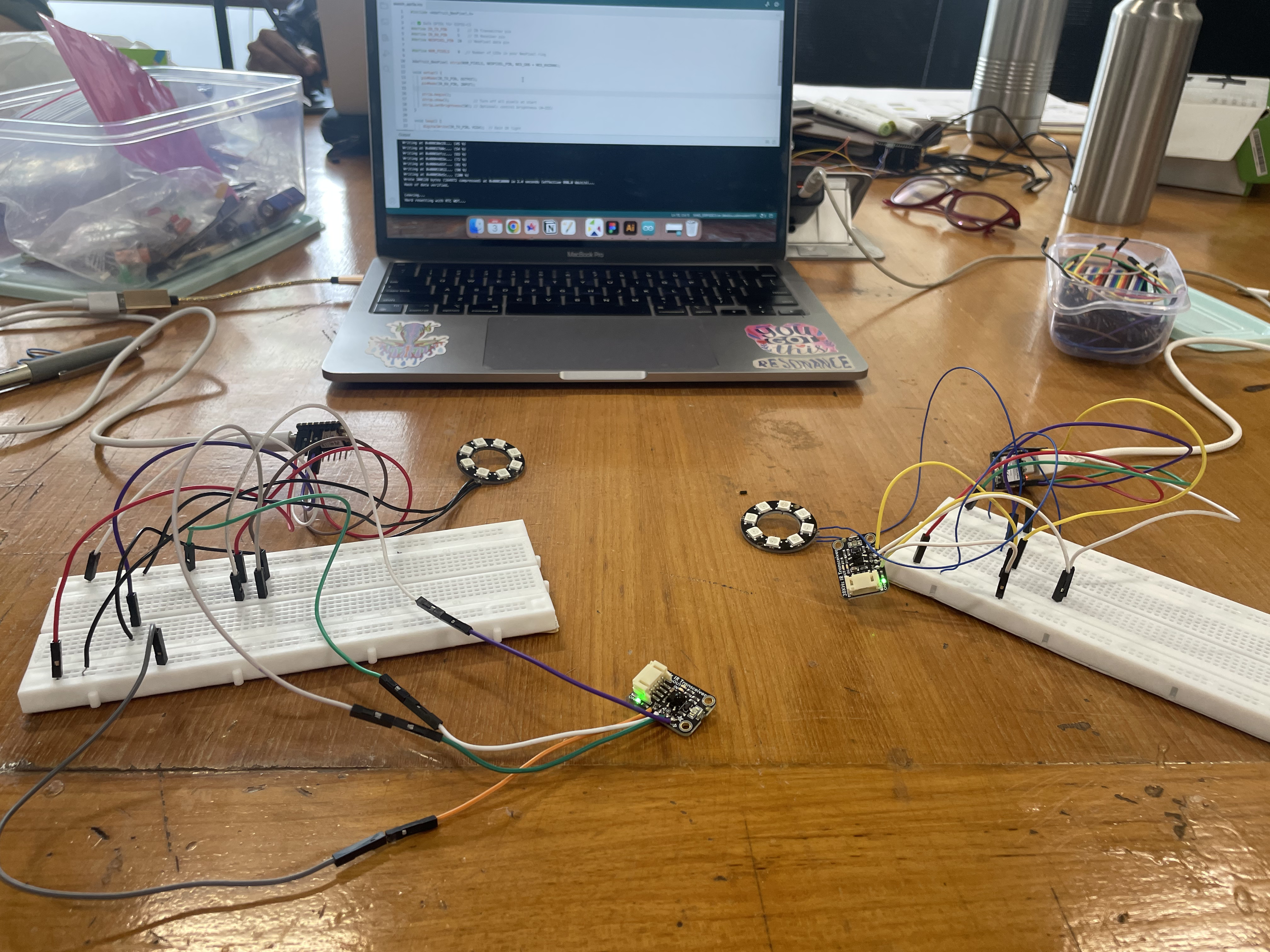
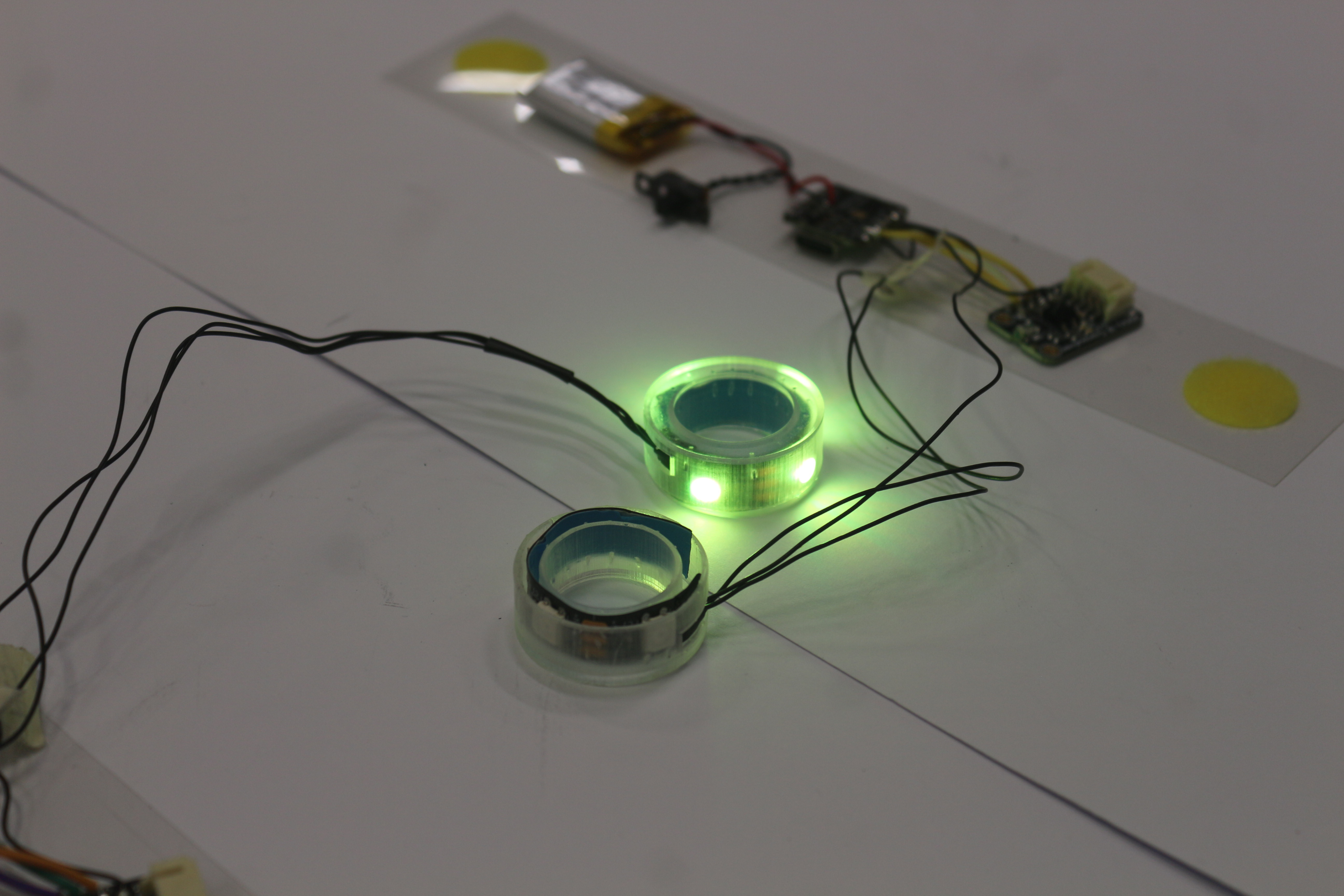
PROTOTYPING
WHAT THIS PROJECT TAUGHT ME
Learnings
I learnt to listen, empathize, and look beyond words. I understood the importance of suspending bias. I also realized that designing for emotion is complex but deeply meaningful.
Limitations
The final prototype excluded interaction 02 & 03 due to technical constraints. Lack of access to micro-sensors limited the making of a functional ring.
Future scope
I would like to expand the project to support any partners caring for each other amidst busy, demanding lives.

© 2025 All Rights Reserved